From our other sites
The story
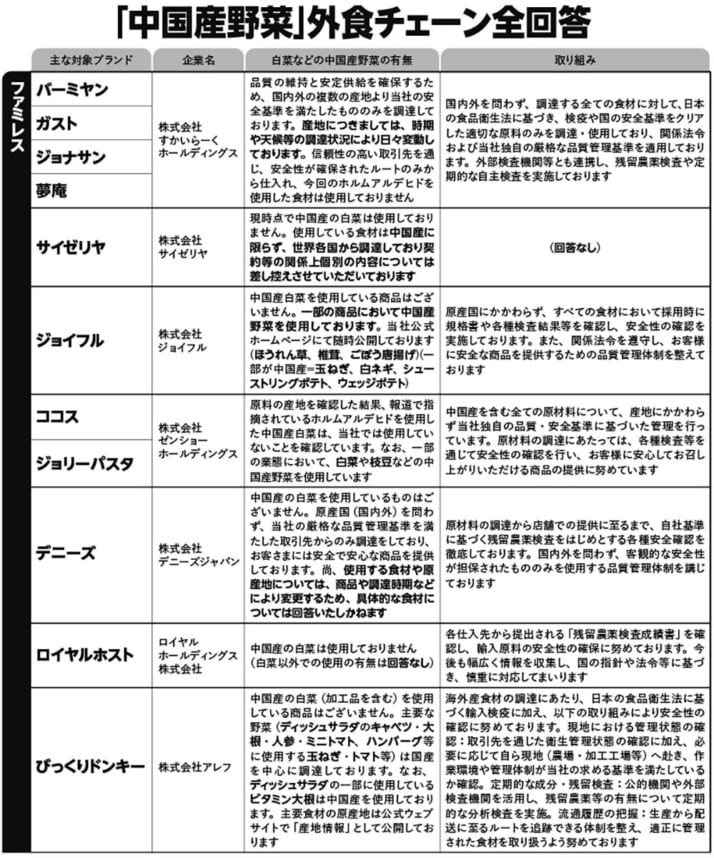
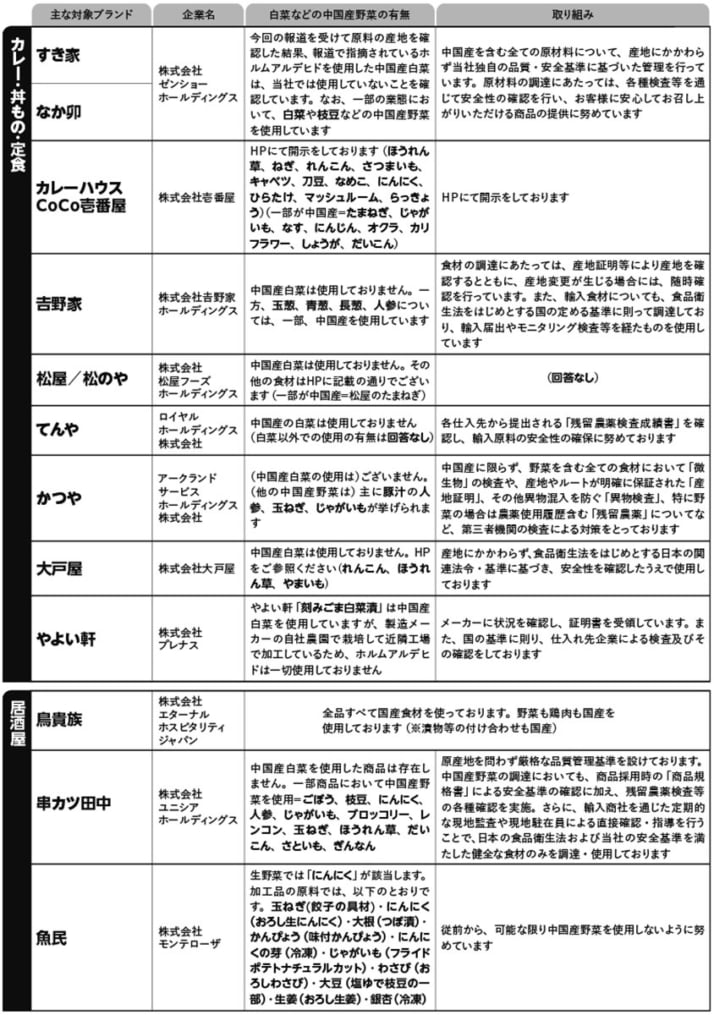
Daily Shincho has published a named list of 174 menu items using Chinese-sourced ingredients across 28 restaurant chains, including Starbucks, McDonald’s, Torikizoku, Isomaru Suisan, and Unagi no Naruse. Deep-seated unease over Chinese food imports lingers from past scandals like formaldehyde-soaked napa cabbage and illegally processed bamboo shoots. On 5ch, resigned comments like “going China-free is impossible” dominated, while the revelation that budget chain Saizeriya actually sources roughly 80% domestic ingredients — and distrust toward companies that refused to respond to the investigation — also drew attention.
With autumn bringing more opportunities to eat out, everyone naturally wants food they can trust is safe. Yet across the 28 major restaurant chains covered here — cafes and coffee shops, fast food, izakaya, Chinese food, udon and soba, and more — the number of menu items using Chinese-sourced ingredients reaches as many as 174. We present the little-known reality revealed by our chain-by-chain “named list” compiled from this investigation.
Illegal processing has come to light not only in formaldehyde-soaked napa cabbage but also in bamboo shoots and more. As concerns over Chinese-sourced ingredients rise again, Weekly Shincho has previously reported on ingredients imported from China being used well beyond vegetables — from tuna at conveyor-belt sushi chains to nori seaweed and pickled ginger.
(Omitted)
Source: news.yahoo.co.jp / Original article here
What people said
Going "China-free" is just impossible, isn't it.
Yeah, it really is impossible. If you only used domestic vegetables, prices wouldn't stay affordable for ordinary people — and seafood without Chinese sourcing? No way.
Gyomu Super also sells directly imported EU products. When it comes to food safety, those are more trustworthy than Japan's own.
Gyomu Super's "Chinese-made frozen food" found with pesticide residue over the legal limit… Operator apologizes, ordered to recall 45,000 units. Similar cases keep piling up.
https://nlab.itmedia.co.jp/cont/articles/3411864/
EU canned goods are pretty sketchy too, you know.

I don't think garlic and chili peppers are all that risky even from China. I grow both every year in my home garden, and the only damage garlic gets is from onion fly larvae. Chili peppers barely need pesticides either. Honestly, domestic garlic is so expensive it kills the urge to buy it — you're better off growing your own. This time of year is actually perfect for planting it.
I bought frozen Chinese broccoli once, and it was unusually bitter.
If you ever grow broccoli yourself, you'll find it's a caterpillar paradise. There's no way to grow it pesticide-free without a row cover. I'd bet even domestic broccoli uses quite a lot of pesticide.
That's because eel grows best in the warm climate of southern China through Southeast Asia.
Japan probably doesn't use formaldehyde to make produce look fresher like in China, but when it comes to pesticide usage, Japan is actually one of the top countries in the world.
You know how leafy greens grown in open fields without any row covers still come out perfectly green and spotless? Ask anyone who actually grows vegetables at home how they look at that…
Uber Eats is just a delivery system — it doesn't make the food itself. That comment makes no sense.
Isn't that because they own their own farms?
I'm just an ordinary guy, so I've never even eaten wild domestic eel. If you ask me whether I could tell the difference between farmed domestic eel and Chinese eel, honestly I'm not confident I could. Maybe I'd notice with a bargain pack from the supermarket, but if it were served at some long-established local restaurant, I probably wouldn't know.
Naruse uses Chinese eel, with a bit of Taiwanese too.
s://www.dailyshincho.com/wp-content/uploads/2026/09/1502166_5-714×628.jpg
Sometimes on 5ch you see people boasting they never eat anything Chinese-sourced, but they're definitely eating it without knowing, lol.
This was a long time ago, back when I lived in Tsutsujigaoka — I bought boiled bamboo shoots to make qingjiao rousi (Chinese pepper steak), but they tasted so strongly of chemicals I couldn't eat it… (I grabbed it without checking, but it was from China). Didn't want to waste it, so I put it out on the balcony figuring a crow would eat it — but not even the crow touched it, lol.
Emulsifiers, stabilizers, coloring agents, sweeteners — doesn't sound like something good for your body.


Isn't the matcha pudding made with Chinese ingredients? Also, wasn't 7-Eleven's rice American-grown? (-_-;)
Background and Key Points of This Discussion
Daily Shincho (Weekly Shincho) has long investigated the reality behind Chinese-sourced ingredients — tuna, nori, and pickled ginger at conveyor-belt sushi chains, for instance — and this latest named list of 174 menu items across 28 chains is an extension of that reporting. The backdrop includes past incidents involving Chinese food products, such as formaldehyde-soaked napa cabbage and illegally processed bamboo shoots, which have left deep-rooted anxiety that “country of origin equals danger.” The thread’s discussion, however, centered on whether avoiding Chinese ingredients entirely is even realistic, with many commenters pointing out that given how seafood and vegetables are sourced, keeping restaurant prices affordable for ordinary people essentially requires using Chinese ingredients. A misconception readers easily fall into is the simple equation “domestic equals safe” — Japan itself is one of the world’s heavier users of pesticides, so country of origin alone doesn’t determine relative safety. Also notable was the fact that Saizeriya, known for its rock-bottom prices, actually sources around 80% of its ingredients domestically — an example that upends the assumption that “cheap equals Chinese.” The fact that some companies named in the article declined to respond to the investigation also raised questions less about country of origin itself and more about these companies’ attitude toward transparency.
*This article is compiled as an excerpt and summary from the 5ch (News Flash+) thread “[Daily Shincho] Starbucks, McDonald’s, Torikizoku, Isomaru Suisan, Unagi no Naruse… Menu items using Chinese-sourced ingredients across 28 restaurant chains.”
Leave a Reply