From our other sites
The story
An article from Toyo Keizai, based on a book supervised by Komazawa University Professor Emeritus Yoshiyuki Takioto, described how immigrants (toraijin) who crossed over from the Korean peninsula between the late 5th century and the Asuka period brought Buddhism, Confucianism, and Taoism, along with technologies like silk farming, weaving, and sake brewing, to Japan — and it became a hot topic on 5ch’s News Flash+ board.
Reacting to the Shinsen Shōjiroku’s record that “a third of the clans in the Kinai region in the 9th century were of immigrant descent,” the thread saw a mix of comments praising the scale of cultural and technological influence left by these immigrants, alongside differing views on how the record itself should be interpreted.
From the Buddhist statues you can’t help but see while sightseeing in Kyoto or Nara, to the “Analects of Confucius” so beloved by business executives, to the “onmyoji” sorcerers familiar from anime and movies — traces of the Buddhism, Confucianism, and Taoism that came from China remain all through our daily lives. According to Komazawa University Professor Emeritus Yoshiyuki Takioto, these influences trace all the way back to the Asuka period. This article excerpts and edits a portion of Takioto’s supervised book, “Walking the World Heritage Site ‘Asuka-Fujiwara Capital’ (with Color Maps),” covering the various technologies brought by the immigrants who crossed the sea one after another from the late 5th century onward, and the huge impact they had on Japan in the Asuka period.
■ From Silk Farming to Weaving and Sake Brewing — The Immigrants Who Built the Foundations of Asuka Culture
Around the end of the 5th century, fleeing wars on the Korean peninsula, many immigrants crossed to Japan from Baekje and Silla.
Source: toyokeizai.net / Original article here
What people said
Saichō mixed up Buddhism, Confucianism, and Taoism from China, lumped it all together as "Buddhism," brought it to Japan, and founded the Tendai school.
Hōnen and Nichiren, who studied under Tendai, said "Saichō's teachings make sense, but I see it differently" and went off to found their own schools, Jōdo (Pure Land) and Nichiren Buddhism.
Shinran, who studied Jōdo, said "Everyone's teachings make sense, but I can win over more followers my way" and founded Jōdo Shinshū (True Pure Land).
Japanese Buddhism has been modded so hard it doesn't even resemble the original anymore — it's basically cult Buddhism at this point (´・ω・`)
Never been to the real deal in India so I can't say, but Vietnamese temples are indistinguishable from Chinese ones.
Even though it's the same Mahayana Buddhism, Japan has a totally different vibe from those — guess that's the backstory behind it.
Come on now lol
Back in those days, from the perspective of "the peninsula and the continent," Japan was basically just Stone Age cavemen with a bit of extra fur lmaooo
Well, the calendar (the old lunar calendar) was a complete import from China right up through the Edo period, and a lot of seasonal customs were imported straight from China too.
Sekku festivals, Tanabata, even New Year's.
↓
Immigrants came from the Korean peninsula and settled in the Kinki region
↓
The Jōmon got split between eastern Japan and Kyushu
↓
The Kyushu Jōmon invaded Kinki and conquered the immigrants (the "descent of the heavenly grandson")
↓
The immigrants fled to what's now Osaka
↓
Their descendants became today's Osaka people
Jōmon-looking people had also lived on the peninsula since way back.
The Jōmon over there probably mixed with all sorts of groups, and at least in Kyushu and western Japan there was surely back-and-forth movement between the peninsula and the archipelago.
It's probably not as simple as "one day a ton of Yayoi people suddenly showed up and replaced or clashed with the Jōmon."
The whole idea tied to heaven —
guh, gah! I can only say this much on 5ch!
It's Chinese in origin, right?
I mean, that's because the language — or rather, the writing itself — was a complete import from China, you know? lol
Ever heard of Man'yōgana (old-style use of Chinese characters to spell out Japanese phonetically)? lol
So of course the ideas, or really the whole way of thinking, got imported wholesale along with it lol
Are you dumb?
"China" has only existed for just over 110 years.
Even "the Chinese" are themselves just a product shaped by humans who originated in Africa.
The four Fujiwara houses are the same clan but get lumped together as one entry, that kind of thing
So the recorded count doesn't actually track with real power
The Taira clan isn't even covered by the record
The Minamoto clan was brand new — Minamoto no Makoto was only 6 years old
Ah, so for the Fujiwara you mean that even within the same clan, branches eventually started going by separate house names (like Reizei and so on), right?
This isn't unique to the Fujiwara — the most famous example is the imperial family itself.
To begin with, the Shinsen Shōjiroku wasn't a survey of every single Japanese person's lineage at the time, so you can't use it as a map of domestic power.
It's just an organized record of the lineages of clans in the Kinai region who had especially close ties to the imperial court.
It simply means immigrant-descended clans were concentrated at the center of Yamato's politics and technology, i.e. the Kinai region.
This isn't some new theory — it's textbook stuff when it comes to the formation of ancient Japan.
Genome analysis has also shown that Kinki and Shikoku clearly carry more immigrant-derived genes than other regions.
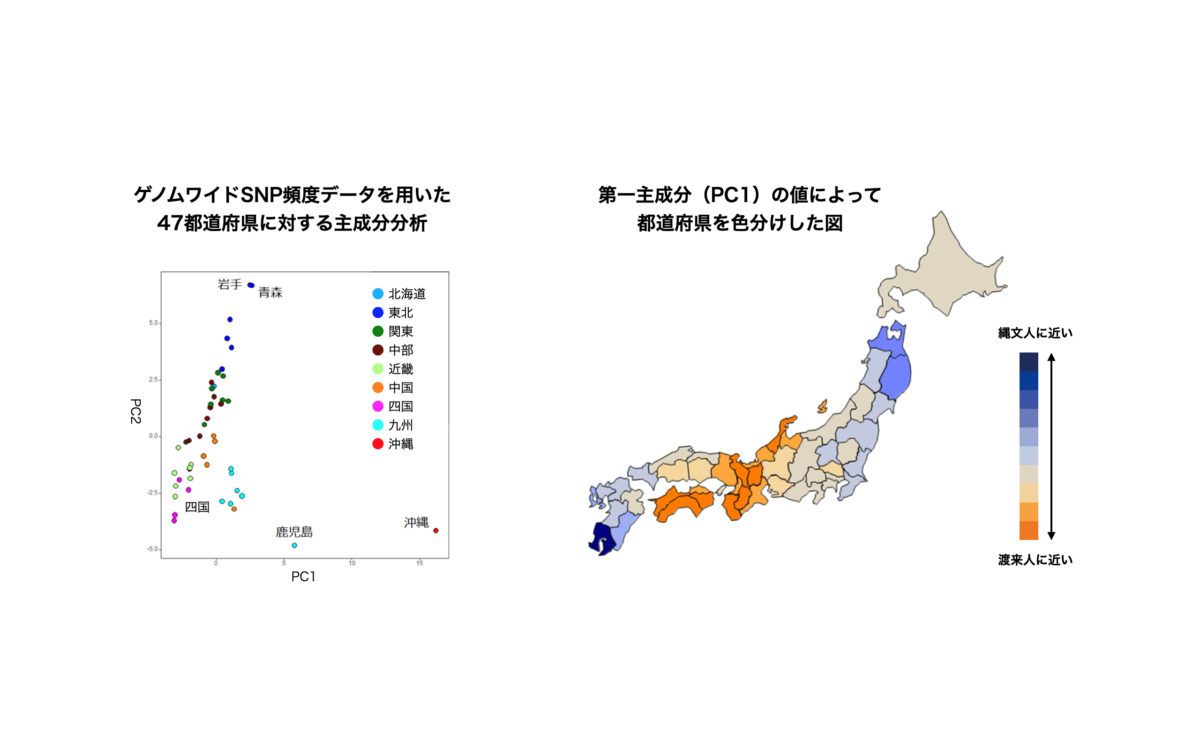
Well, but it's not really my intention to contribute to "dividing the nation" either.
Just putting that out there lol
Satsuma dialect barely sounds like Japanese to begin with lol
Maybe…? lol
Well, of course the opposite could be true too lol
We use plenty of Sino-Japanese vocabulary (kango) ourselves, you know
Cling to this kind of spiritual mumbo-jumbo and you'll end up like GMO (the Japanese internet company known for its intense "willpower over logic" corporate culture).
The influence of Buddhism, Confucianism, and Taoism carries on right up to today — people just aren't conscious of it anymore.
Background and Key Points of This Discussion
The Shinsen Shōjiroku that this article draws on was a register of clans compiled in 815 at the order of Emperor Saga, and its scope is limited to clans in the Kinai region with close ties to the imperial court. Since it isn’t a census of the entire population, the figure of “a third of clans” reflects the origin makeup of the clans at the center of politics at the time — not the share of immigrants in the overall domestic population. Without keeping this premise in mind, it’s easy to misread the immigrant-descended share as either too high or too low. In the thread, many comments praised the Buddhism, Confucianism, Taoism, silk farming, weaving, and other technologies that immigrants brought over, while some comments also linked the ancient immigrant story to modern-day immigration or to the character of residents in specific regions. It’s worth noting that genetic research showing regional differences (genome analysis) and the Shinsen Shōjiroku as a historical document are two separate kinds of evidence, and the two shouldn’t be conflated.
*This article is composed as an excerpt and summary of the 5ch (News Flash+) thread “[History] By the 9th Century, a Third of Kinai Clans Were Immigrant-Descended… How Asuka-Period Japan Became Thoroughly Steeped in Chinese-Derived “Buddhism, Confucianism, and Taoism”.”
Leave a Reply