From our other sites
The story
On November 13, the TBS news program “news23” reported that actress Kyoko Koizumi has been working to plant 3,000 acorn-bearing trees as a countermeasure against bear damage. Her hands-on approach — heading into the mountains herself — has even sparked talk of a possible “career switch to politics.” On 5ch, opinions split over just how effective the tree-planting would actually be. Some praised the effort, citing Hakusan City’s case where bear sightings dropped to zero, while others countered that since the bear population itself keeps growing, any new acorns would simply get eaten up — and still others pointed out that in some regions bears prefer fruit and crops over acorns anyway, turning the thread into a debate that pulled in expert opinions.
Kyoko Koizumi Plants 3,000 Acorn Trees to Tackle Bear Damage — “Talk Isn’t Enough”: Her Hands-On Action Fuels Hopes of a “Political Career Switch”
On November 13, the news program “news23” (TBS) reported that actress Kyoko Koizumi, prompted by bear-related damage, has been working on an effort to plant 3,000 acorn-bearing trees.
Her willingness to personally head into the mountains has even led some to hope she’ll switch careers and go into politics.
Source: news.yahoo.co.jp / Original article here
What people said
It probably does help, right?
Though planting them is one thing — if it's a bad harvest year, it won't matter anyway.
Hakusan City: zero bear sightings since mid-August, big drop prefecture-wide too — is it the beech trees' "bumper crop"?
ttps://www.hokkoku.co.jp/articles/-/2269677
Fine, I guess, if you plant them way out deep in the mountains where people never normally go.
And only if the saplings come from seeds native to that same mountain —
otherwise the genetics end up off.
But if you plant them near the foot of the mountain, I'd think it'd just attract bears and other fruit-eating animals.
In normal years the bear population grows to match what that forest can support, so in years like last year and this year when the acorns don't grow well, more bears end up coming down into town.

Beautiful even without makeup.
"Kyon-Kyon" (her longtime nickname) 40 years ago, at twenty

In the thumbnail I was like, why's she got a lightsaber strapped to her back?
I always thought the best fix for the bear problem was just planting more acorn trees in the mountains, too.
But for some reason the experts never seem to say this.
That's because it's already been tried and failed overseas.
This has been debated between the Japan Bear and Forest Society and experts for about 20 years now.
They already started scattering acorns back in 2004.
Since nobody really knows if it works or not, they don't stop even when hunters object.
Apparently they used to cull bears in spring, but stopped under protection policies.
And that's reportedly when the population shot up.
Both bears and deer have overpopulated.
Because people stopped hunting them.
If the routes bears use to come down from the mountains are limited, it should be easier to scare them off and drive them back.
And it'd be even better if you could build a buffer zone between the villages and the mountains.
Can't be done in rural areas — there just aren't enough people.
The easy option is electric fences.
Some municipality eliminated the damage that way.
The reason nobody wants to do it is they're trying to save money (lol).
The thinking is it's cheaper to hand hunters a tiny bit of pocket money and let them risk their lives instead.
I don't think it's that the numbers increased — I think it's just become easier for bears to come out into residential areas. I think it's impossible to fully grasp the actual bear population.
They have increased.
They've overpopulated, so they're overflowing out of the mountains.
ttps://newsdig.tbs.co.jp/articles/-/2655927
If there's something tastier than acorns around, bears will eat that instead.
Fruit trees planted by humans are easier and tastier, so once a bear learns that, it keeps coming back.
My grandma lives on an island in the Seto Inland Sea, and the wild boar damage there is awful — she says boars love sweet potatoes and pumpkins so much that they come to eat them, and now she can't even grow them anymore.
>Fruit trees planted by humans are easier and tastier, so once a bear learns that, it keeps coming back.
You clearly didn't even read the article you posted lmaooo
The analysis found that bears in northeastern Hyogo Prefecture prefer to eat "fleshy fruit" in autumn before hibernation, even in forests where acorns are available.
"Fleshy fruit" refers to juicy, water-rich fruit like aohada (Japanese holly), urajiro-no-ki (a whitebeam-type tree), and takanotsume — basically berry-type fruit.
It's stuff that grows naturally in the mountains — nowhere does it say they're eating farm crops, lmaooooooo
I read the whole thing, you know?
Instead of spamming "lol" everywhere, you'd do better to think hard about the parallels between fleshy fruit, farm crops, and bears showing up in town.
The word "crops" doesn't appear even once across all 10 pages of the article you posted in Re: #300, lmaooooo
You just saw "fleshy fruit" and decided in your own head, "that must mean human-grown crops~" —
entirely on your own, lmaooooooo
The article clearly states that the "fleshy fruit" it's talking about is naturally occurring stuff
like aohada, urajiro-no-ki, and takanotsume trees, lol
You're probably so locked into that assumption now you can't correct your own thinking anymore, lmaooooo
https://www.uxtv.co.jp/ux-news/20260928-ux-016/?utm_source=chatgpt.com
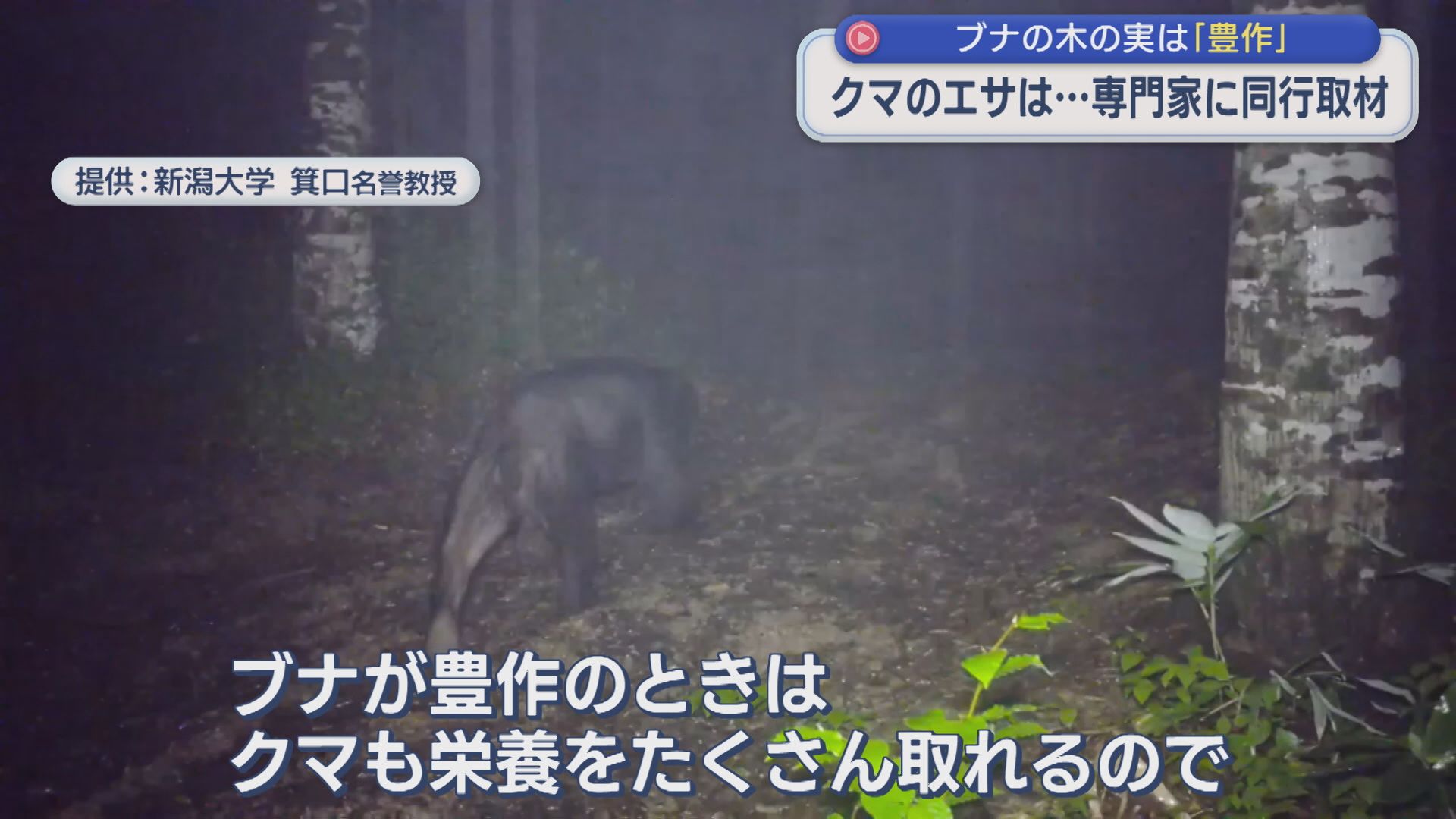
■ Professor Emeritus Hideo Minokuchi, Niigata University
"When beech trees have a bumper crop, bears get plenty of nutrition, which means a lot of cubs will be born during hibernation afterward."
Background and Key Points of the Debate
This isn’t the first time acorns have been used as a countermeasure against bears — the Japan Bear and Forest Society and others have been running tree-planting campaigns since around 2004. Opinions on its effectiveness are divided even among hunters and experts, and the thread saw a similar split: some pointed to cases like Hakusan City, where bear sightings dropped sharply, while others argued that as long as the bear population itself keeps growing, planting alone can’t keep up. According to Ministry of the Environment data, bears tend to range farther and move closer to human settlements in years when acorns are scarce — but it’s easy to overlook that acorns aren’t necessarily their only staple food, since in some areas bears actually prefer fleshy fruit or farm crops. It’s also worth noting that the halting of once-routine spring culling under protection policies has been cited as a factor behind the population increase, meaning the tree-planting debate is really just one piece of a broader discussion that also includes culling and electric fences.
※This article is excerpted and summarized from the 5ch (Geinou/Sports Express+) thread “yŒ|”\z¬ò¡“úŽqAƒNƒ}”íŠQ‘Îô‚Ńhƒ“ƒOƒŠ‚Ì–Ø3000–{AŽ÷ uŒû‚¾‚¯‚ł̓_ƒvŽ©‚çs“®‚µ‚‚Ü‚égŽ¡‰Æ“]gh‚Ö‚ÌŠú‘Ò [“~ŒŽ‹LŽÒš].”
Leave a Reply